As a part of my need finding class at Stanford, my three teammates and I spent 10 weeks researching and designing three separate streams of products for IKEA based off our user insights.
Year: 2021
Role: UX Researcher, UI Designer, Project Management
Affiliation: Stanford University's ME216A Need Finding Class


The pandemic completely shifted the dynamics of work and running a family for many parents. As a part of our need-finding class project objective, our team was tasked with ideating new ways IKEA could improve the lives of working pandemic parents. Over the course of ten weeks, our team researched and interviewed parents from different parts of the country, hoping to gain insights on their life during the pandemic. Many worked from home, and others dedicated their time to treating those directly impacted by COVID-19.

Our main users in this project were parents who had been been placed in a work-from-home employment setting. We relied on our own network of known parents and as well as that provided by our instructors. With both streams of outreach we managed to interview 6 total parents. Their occupations ranged from software development to front-line health care workers. The amount of family members they each ahd also ranged from as low as 2 other members to 4 members.

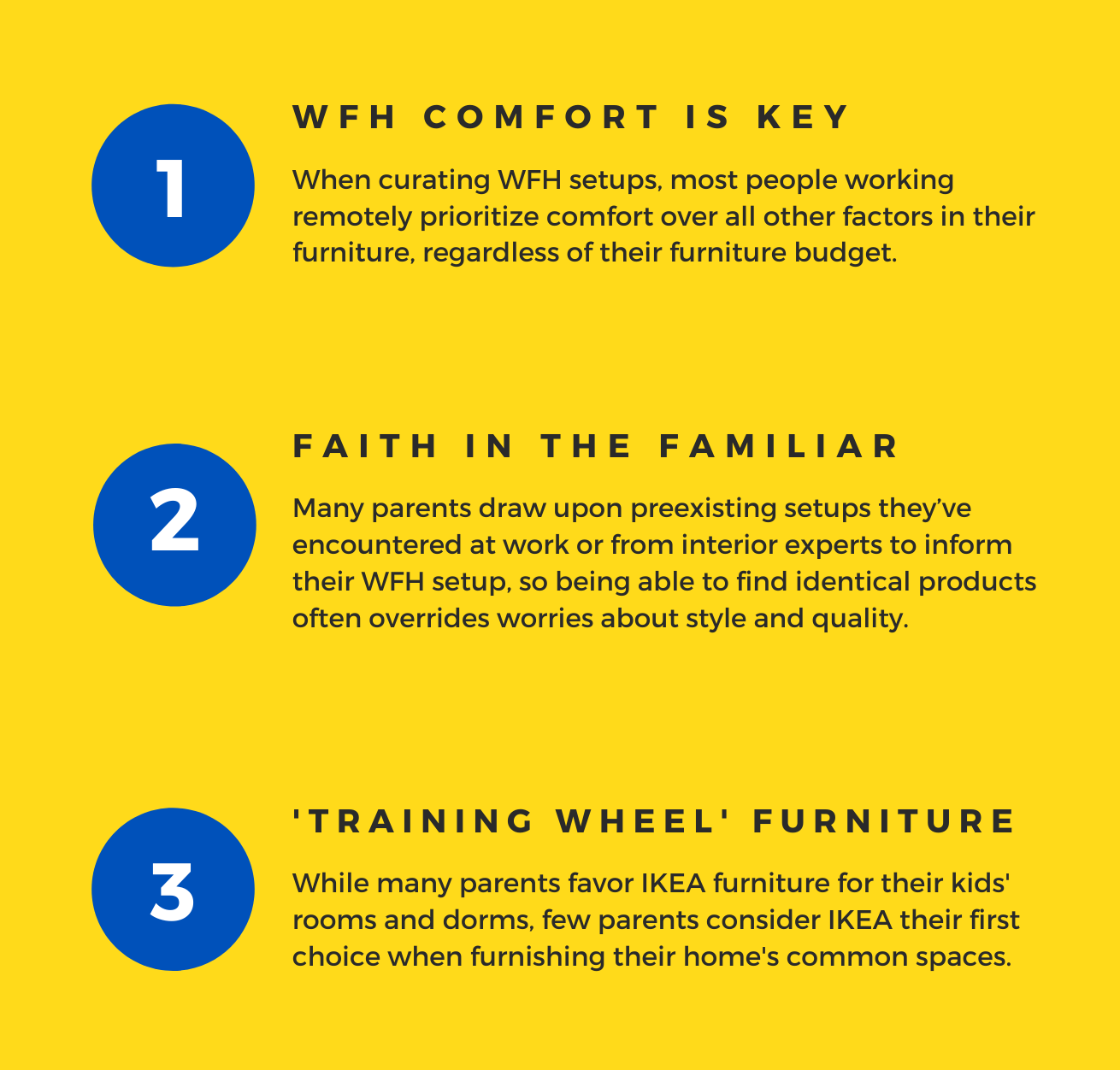
Interview after interview, we noticed a common variable among the parents: prioritizing comfortable furniture. To name some parents, Vadim required his office chair to be a comfortable gaming chair: one that he could sit in all day for work and even after for a game of World of Warcraft. When shopping, he measured the chair's comfortability by sitting on them in stores, but has been unable to do so since the pandemic started. As a shopper with a high priority for comfortability, he mentioned how he "bought the most comfortable chair regardless of price.”
Another parent, Heejae, took to a more online approach during the pandemic and search-engined "the most ergonomic chair of the year" with hopes in avoiding the lower back pain accompanied by uncomfortable, weak cushions. He ended his chair journey with a purchase price tag of $1000. Likewise, Tom filled his entire available working space at home with comfortable, ergonomic furniture he was familiar with from work. Tom claimed that not buying quality office furniture was like "going cheap on a pair of shoes." which provided us with the perspective that comfort was prioritized over all other factors, including money.
Tom, Wonseok and Heejae all shared with us their source of inspiration for creating their work-from-home setup. When the pandemic started, Tom anticipated remote working would last longer than expected and set out to order all of his WFH furniture early on. Luckily for Tom, he did not have to do much research. At Oracle, Tom’s office featured top of the line ergonomic furniture like a standing desks, large monitors and a comfortable chair. As a result of his experience, Tom knew exactly what to purchase and has been content with the identical products since.
Like Tom, both Wonseok and Heejae’s WFH setup was influenced by their experience with their old office space. On another hand, we have parents like Jill who are similarly influenced, but from another source. Jill enjoys browsing Amazon suggestions and magazine catalogs but her shopping behavior is mainly influenced from watching her favorite TV personality: Rachael Ray. Jill shared with us how impactful guest interior design experts invited on the Rachael Ray show are to her decisions in purchasing furniture. Jill uses their advice in home renovation, décor, and furniture functionality.
Many of our interviewees had the same impression of IKEA: while the products are of good quality for the price, they are not meant to last. Tom and Jill's stories stood out to us the most.When Tom's daughter was accepted into Washington State University, Tom detailed how they furnished her apartment solely using IKEA products. What surprised us was the expectation he went in with. Tom informed us that he did not expect the furniture to last longer than four years. Tom and his daughter had no intention in keeping it after her time in college. "It's not worth taking home." In the end, they gave the apartment owner all of the furniture.
When asked if she was familiar with IKEA, Jill recalled the furniture in her old apartment home. While she loves IKEA for its "Swedish" curated "cute" aesthetic, she was unable to use most of her furniture once she moved. She described it being a "pain" of a process to have to move furniture that would ultimately have no use and just end up getting thrown away. "Durability is important, I don't want to have to replace it often."
After our findings, we set out to understand the behavior of the parents: Why do parents prioritize comfort over price? All parents are familiar with the stress of raising a family, but that stress is compounded further when they're also working from home. Once all interviews were said and done, our team set out to use frameworks to sort through the information.

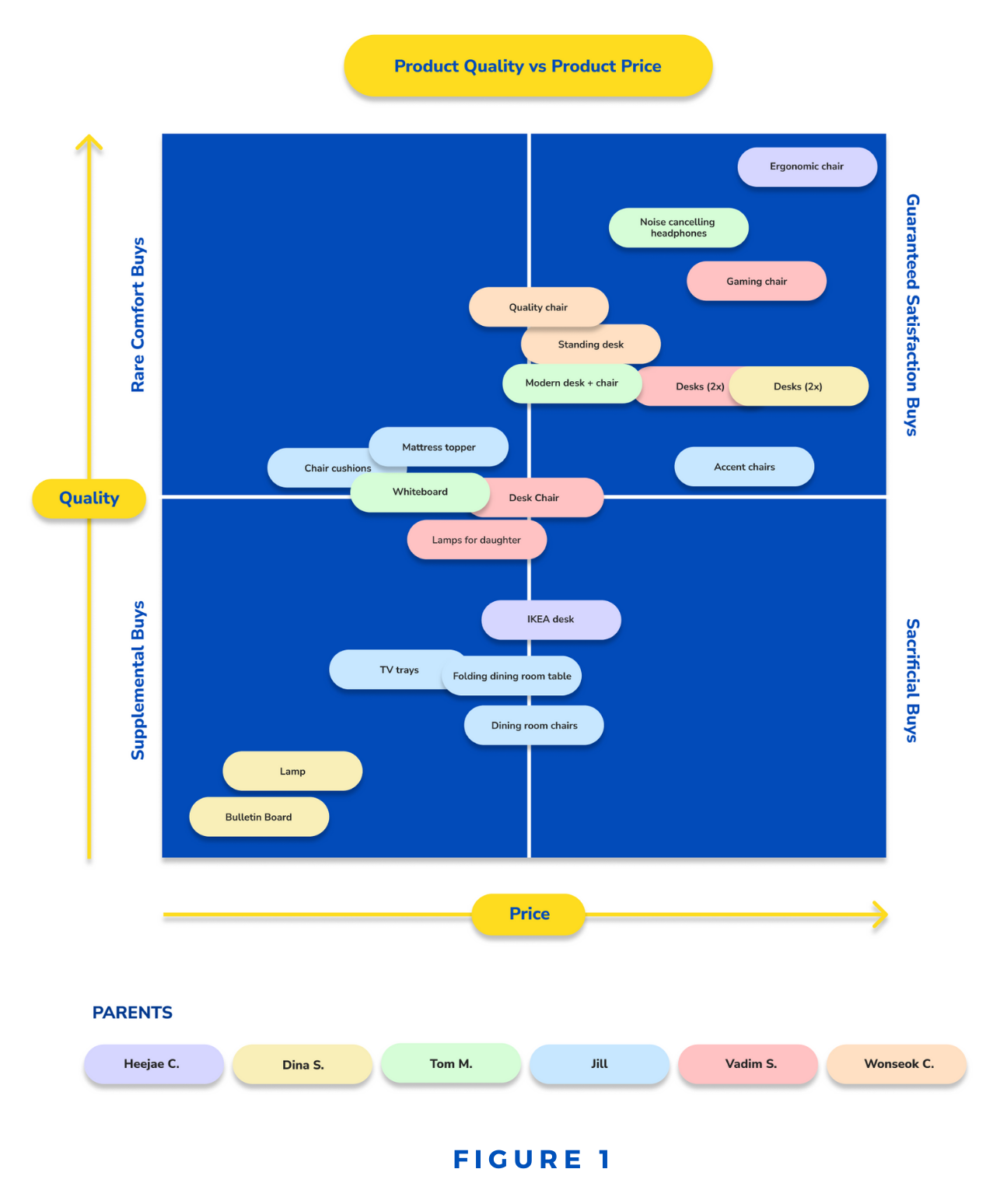
Figure 1 is the framework we developed to help us visualize the products parents were buying and their purpose in doing so. This framework allowed us to see the correlation between the patterns of price and guaranteed satisfaction indicating that parents placed an importance, measured by the amount of money they spent, on the objects they would be utilizing or in contact with the most.

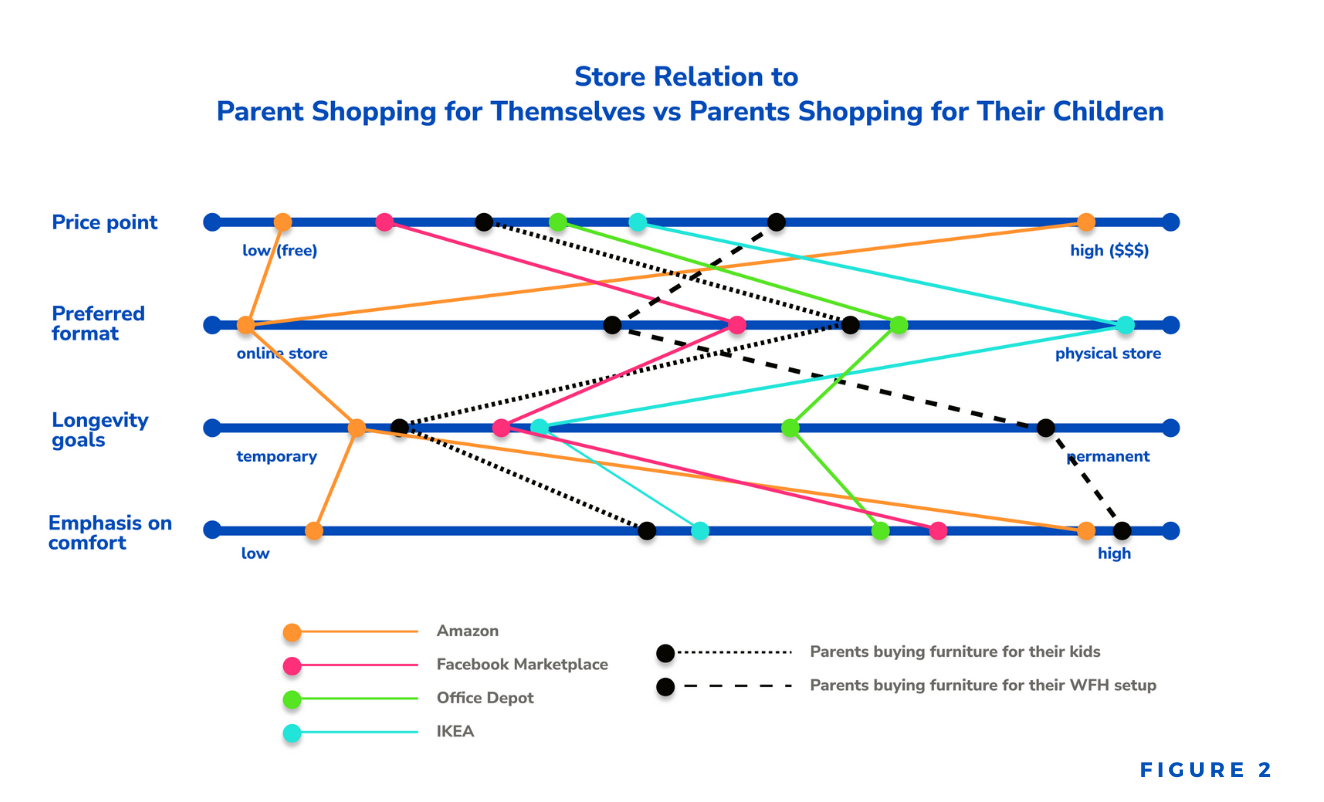
Figure 2 shows our second framework which visualizes the relationship of all the different stores frequented by the parents interviewed to how each store aligns with a parent's shopping goal. From this, we deduced that IKEA could appeal to parents by (1) promoting their online store to a higher extent, (2) marketing their products with longevity as a priority, and (3) placing a greater emphasis on comfort in future designs.

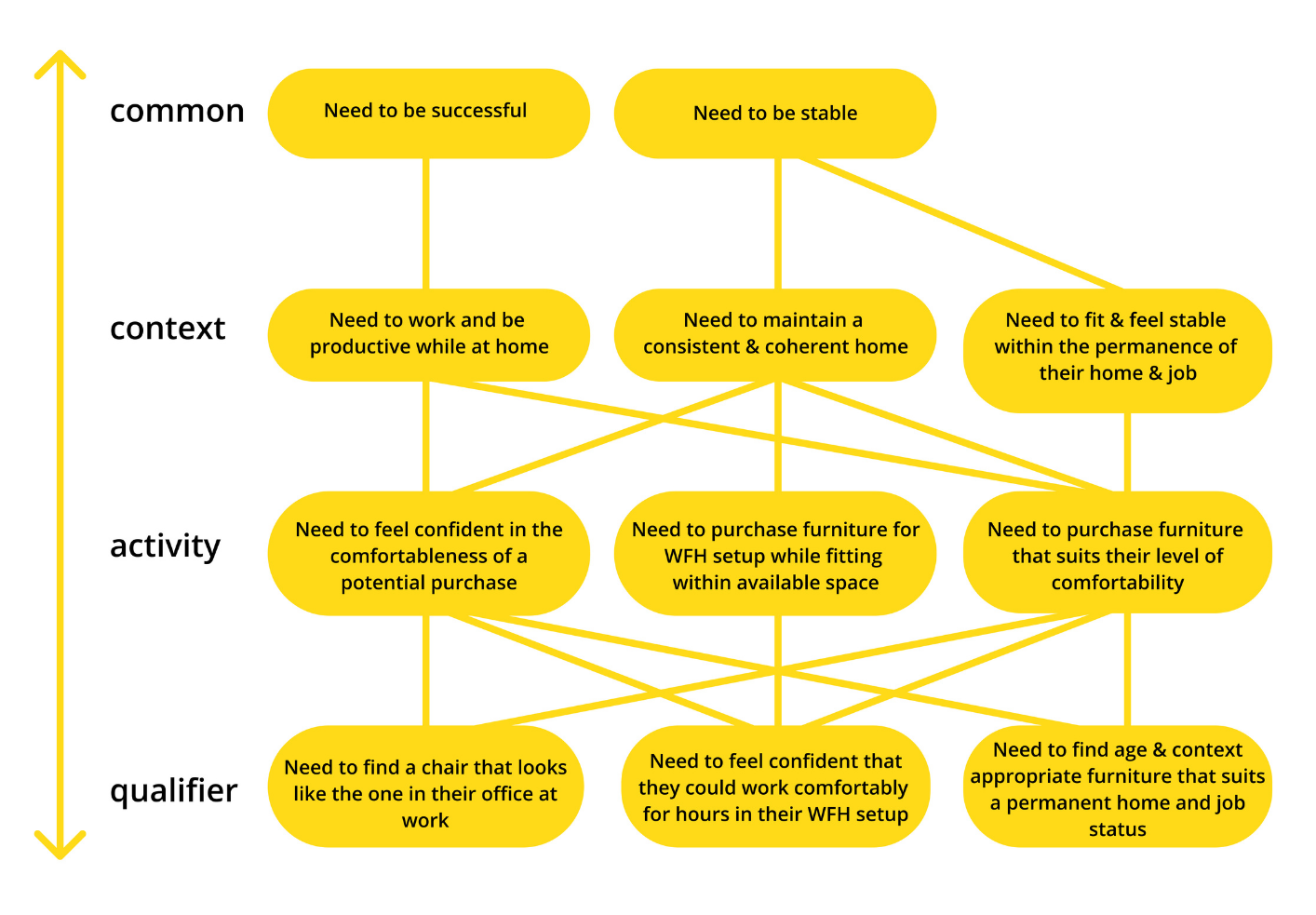
From our interviews, we created a needs hierarchy to help organize the needs identified for out interviewees. We derived these from various observations, findings, and insights. From these needs, we were able to develop themes and design principles regarding a value for permanence, reliability in comfort, and the ability to visualize a space.
Based on these design principles and frameworks, our team set out to come up with solutions that were:
Here's what we came up with.

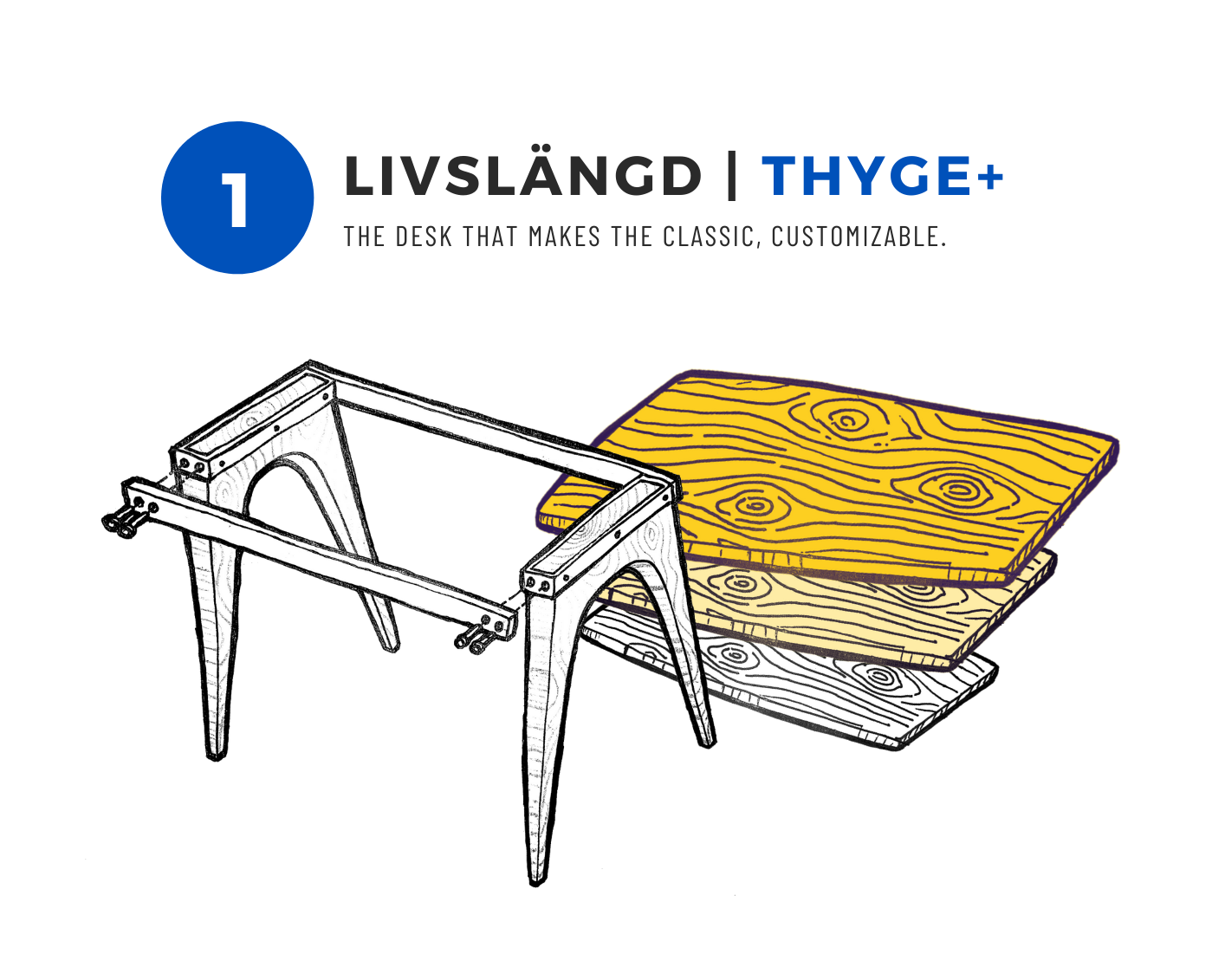
Right now, almost no IKEA desks are made of any real, solid wood. And of the few that do incorporate solid wood, like ARKELSTORP and KNOTTEN, the wood is left unstained and pale—they look like any other desk made of particleboard and plastic. However, by juxtaposing wood legs stained dark to evoke the quality of mahogany with a wood desktop left pale to stay true to the light and airy feel of IKEA's catalog, this desk promises timelessness and permanence. The beauty of the contrasting woods is further highlighted by the through-mortise-and-tenon joints on each side, reassuring parents that this desk is a piece of quality craftsmanship they'd be proud to add to their home permanently.
IKEA's current table bar systems offer many options, but little choice—the tabletops are made of particleboard, and the legs are plain steel cylinders and/or starkly industrial. This customizable desk, on the other hand, has a tapered form inspired by Swedish furniture design and interchangeable parts made of real wood, stained to look like expensive materials like rosewood and mahogany.
The main material for both the legs and tabletop is beech, an affordable, easily machinable, easily wood-stained, and IKEA-friendly wood. Furthermore, swapping tabletop sizes is easy with the replaceable crossbars, which makes the frame compatible with all existing IKEA tabletop designs.

Parents working from home need to feel confident that they can work comfortably for hours in their WFH setup. Unfortunately, IKEA isn't seen as the go-to destination for ergonomic furniture, in part because IKEA's affordable prices can (counterintuitively) dissuade buyers looking for the best in comfort. So what can override this uncertainty, especially as more and more people shop online and don't always want to try out furniture in person?
By partnering with chiropractors and orthopedic physicians, IKEA can assuage customers' worries by giving them direct ratings of each item's comfort. This handy 'sticker', easy to implement online or in-store, lets comfort-minded customers see ratings by trusted experts at a glance.
IKEA already has a longstanding history of collaborations with artisans, designers, and artists from across the globe, all in the name of taking IKEA products to the next level. Chiropractors and/or orthopedic physicians are an easy next step if IKEA wants to reach the WFH customer base.

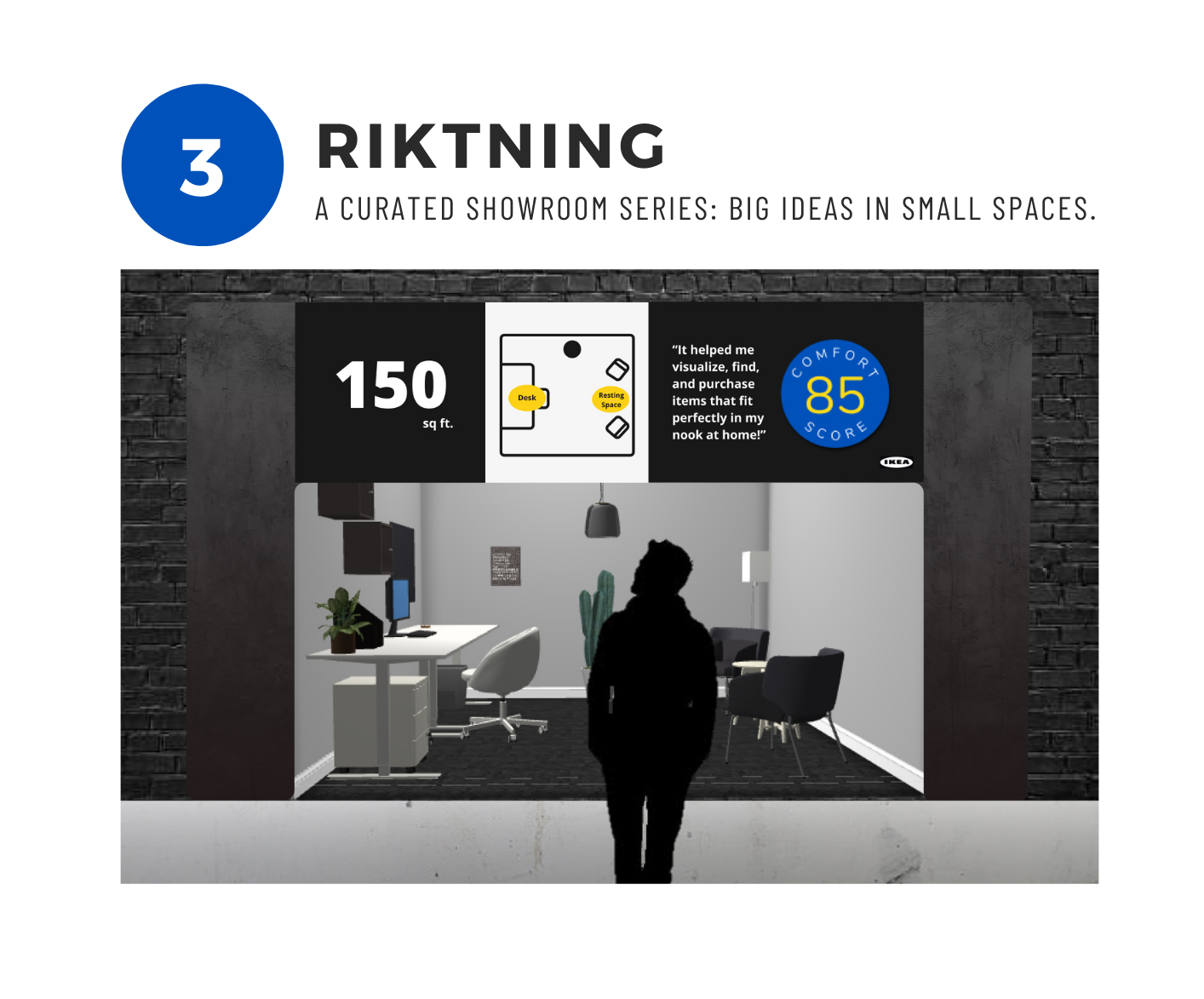
Finding furniture for a space is already a tedious process, but what makes it most difficult for parents are other factors in this process such as availability in nearby stores, budget, time, and more. This solution covers the parents’ need to purchase furniture that fits in the available space at home, especially as it is a laborious process for many parents. IKEA can utilize its existing showroom layout to feature these different-sized room setups and allow customers to visualize spaces in person.
As companies and parents look to hybridize remote and physical work in the future, this pandemic has opened up the market for developing work from home spaces. For the millions of parents working from home, IKEA can pave the way as a leader in helping parents streamline their purchasing process. One additional way to establish more reliability, is that IKEA can extend collaborations with well-known home goods celebrities, like Marie Kondo or Rachel Ray. Another idea we had was to make “mogul-specific” rooms, where they offer a work-from-home showrooms with items and furniture that that person has picked out.
To help parents who might have less space, this can prove to hit on multiple pain points such as having to gamble with online purchases, scouring the web for the right product, or hitting multiple stores to find the right desk. Vadim mentioned how from a previous job as a mover, he was able to develop his own home style as inspired by the many home setups he encountered. Similar to Vadim, WFH shoppers can have a more holistic experience when finding furniture that fits their spaces and can them visualize into their own. This would also decrease the product time search significantly and remove the hassle from the process.

This course surrounded itself around the act of need finding and finding different ways to categorize those needs as well as address them. It was pretty complex and challenging to learn that process while actively applying it to the project at hand. It was really a class of trial and error but also a lot of deep thought with the insights we gathered from interviews. We were given new ways to put these insights into perspective by mapping patterns, engaging with quantitative analysis, and even by refining the sorts of questions asked to our interviewees. It was also a bit challenging finding already busy adults who had an hour ever so often to speak with students. From our interviews, we could tell that these folks led very busy lives and also had to build a sense of trust in our research. This ultimately presented constraints in terms of a limited pool of interviewees as well as the inevitable wall of trust they had in us as people outside of their circle of life.
Due to the specific focus of this class, it really called on my ability to focus in on one of the many hats that product designers wear. There were multiple moments were this constant process of defining the need felt like there could not be anymore left to uncover, until there was--and that made me truly appreciate the beauty in the process of need finding. This project allowed me to put my toolkit for need finding to use both experimentally and based on theory. I also really learned a completely new perspective to user research which is the part in which you build trust with them, enough to be able to tell you about their true pain points and areas of need. I appreciate the effort that both the instructors and my fellow teammates poured into this experience. It will be one I carry with me through future projects and even through simple moments in life. Moving forward, I plan on holding tight to my toolkit, but also loose enough to let in more tools.